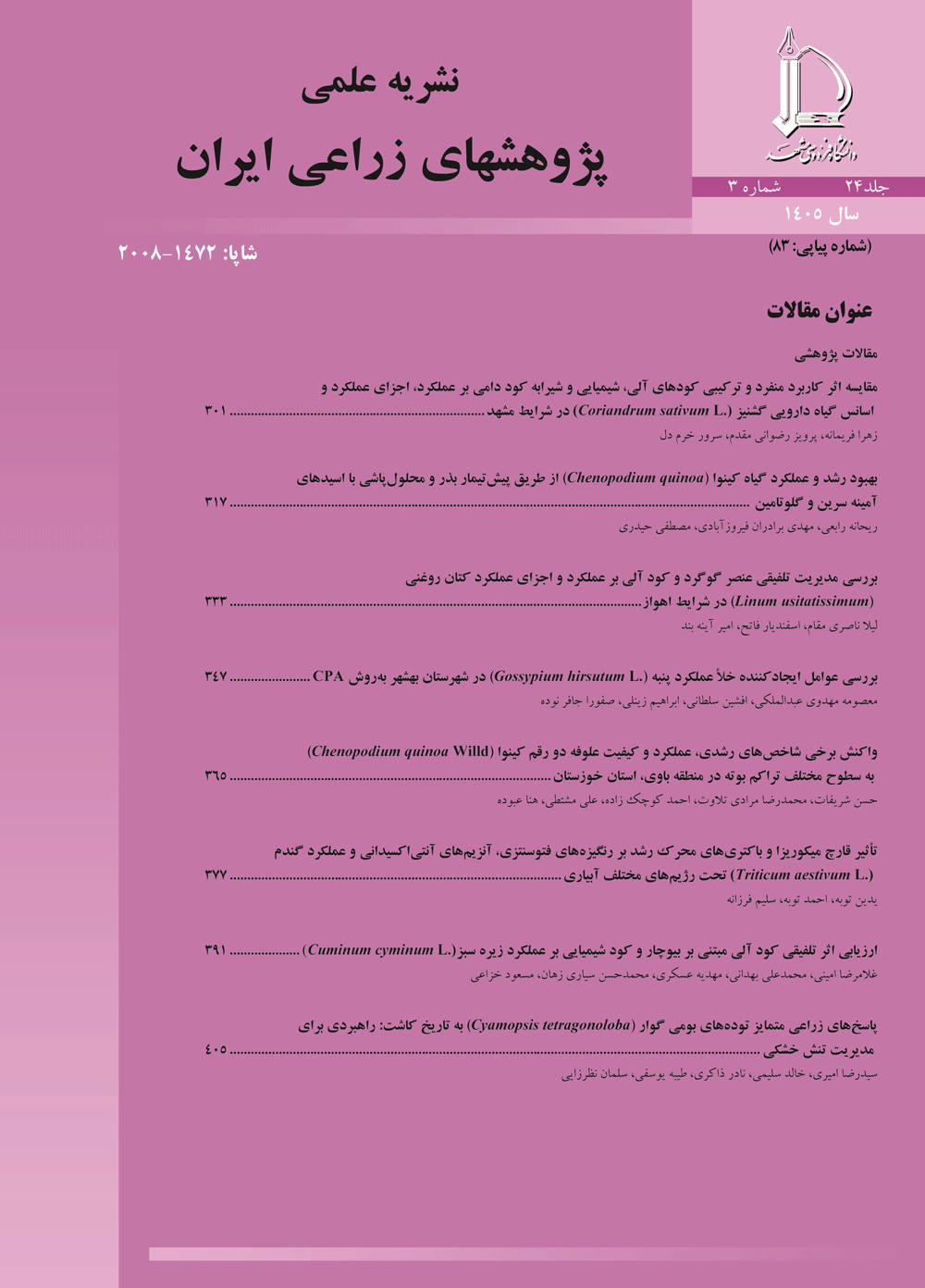
بهمنظور بررسی تأثیر باکتری Thiobacillus، کاربرد گوگرد و کود آلی بر عملکرد و رشد کتان روغنی (Linum usitatissimum) در شرایط اهواز، پژوهشی طی سال زراعی 1401-1402 در دانشگاه شهید چمران اهواز اجرا شد. این آزمایش بهصورت طرح فاکتوریل برپایه بلوکهای کامل تصادفی با سه تکرار انجام گردید. عامل اول شامل سطوح مختلف گوگرد و Thiobacillus در پنج سطح شامل شاهد (بدون استفاده از گوگرد و Thiobacillus)، 200 کیلوگرم گوگرد در هکتار، 400 کیلوگرم گوگرد در هکتار، 100 کیلوگرم گوگرد در هکتار همراه با مایه تلقیح باکتری Thiobacillus و 200 کیلوگرم گوگرد در هکتار همراه با مایه تلقیح باکتری Thiobacillus بود. عامل دوم شامل استفاده از کود آلی در سه سطح شاهد (عدم استفاده از کود آلی)، شش تن ورمیکمپوست و شش تن کمپوست باگاس نیشکر بود. نتایج نشان داد که در بین سطوح مختلف کود آلی، کمترین میانگین تعداد شاخه (7.03 شاخه)، تعداد کپسول در بوته (185 کپسول)، تعداد دانه در کپسول (7.3 دانه)، مربوط به تیمار شاهد (عدم کاربرد کود آلی) بود. در مقابل در شرایط کاربرد تیمار شش تن ورمیکمپوست، بیشترین تعداد شاخه در بوته (7.9 شاخه در بوته)، انشعابات فرعی (34.1 شاخه)، وزن هزار دانه (6.1 گرم) و عملکرد دانه (3218 کیلوگرم در هکتار) بهدست آمد. نتایج نشان داد که کاربرد ورمیکمپوست در بین سطوح کود آلی و تیمار 200 کیلوگرم گوگرد همراه با تلقیح باکتری در بین سطوح گوگرد، تأثیر مثبت و معنیداری داشت. کاربرد تلفیقی این تیمارها منجر به بهبود عملکرد دانه و اجزای آن شد.
1.Anandham, R., Sridar, R., Nalayini, P., Poonguzhali, S., & Madhaiyan, M. J. M. R. (2007). Potential for plant growth promotion in groundnut (Arachis hypogaea L.) cv. ALR-2 by co-inoculation of sulfur-oxidizing bacteria and Rhizobium. Microbiological Research, 162(2), 139-153.https://doi.org/10.1016/j.micres.2006.02.005
2.Arancon, N. Q., Edwards, C. A., Bierman, P., Welch, C., & Metzger, J. D. (2004). Influences of vermicomposts on field strawberries: 1. Effects on growth and yields. Bioresource Technology, 93(2), 145-153.https://doi.org/10.1016/j.biortech.2003.10.014
3.Asadu, C. L. A., & Unagwu, B. O. (2012). Effect of combined poultry manure and inorganic fertilizer on maize performance in an ultisol of south-eaNigeriNigeria. Journal of Soil Science, 22(1), 79–87.
4.Babaei, P. Golchin, A., Basharti, H., & Afzali, M. (2013). Effect of microbial sulfur fertilizer on nutrient uptake and yield of soybean in a calcareous soil. Iranian Journal of Soil Research, 26(2), 145-151. (In Persian). https://doi.org/10.22092/ijsr.2012.126366
5.Bhatt, M. K., Labanya, R., & Joshi, H. C. (2019). Influence of long-term chemical fertilizers and organic manures on soil fertility-A review. Universal Journal of Agricultural Research, 7(5), 177-188.https://doi.org/10.13189/ujar.2019.070502
6.Devi, K. N., Singh, L. N. K., Singh, M. S., Singh, S. B., & Singh, K. K. (2012). Influence of sulphur and boron fertilization on yield, quality, nutrient uptake and economics of soybean (Glycine max) under upland conditions. Journal of Agricultural Science, 4(4), 112-120.https://doi.org/10.5539/jas.v4n4p1
7.Deyholos, M. K. (2006). Bast fiber of flax (Linum usitatissimum L.): Biological foundations of its ancient and modern uses. Journal of Plant Sciences, 54(4), 273-280.
8.Esmaili behbahani, R., Fateh, E., & Ayneband, A. (2019). Evaluation of growth characteristics of Flax. (Linum usitstissimum L.) with application of organic and nitrogen fertilizers. Agricultural Science and Sustainable Production, 29(1), 137-150. (In Persian)
9.Haider, K., & Schaffer, A., (2009). Soil Biochemistry. Science Publishers, Enfield.116 pp.
10.Hassan Belyani, M., Tadayon, M. R., & Fadaei Tehrani, A. A. (2019). Investigating some growth and performance characteristics of camelina under the influence of biological and chemical fertilizers. Journal of Production and Processing of Agricultural and Horticultural Products, 10(1), 39-52. (In Persian). http://dx.doi.org/10.47176/jcpp.10.1.209111
11.Havlin, J. L., Beaton, J. D., Tisdale, S. L., & Nelson, W. L. (1999). Soil Fertility and Fertilizers Prentice Hall. New Jersely, p. 345-355.
12.Hu, Z. Y., Zhao, F. J., & McGrath, S. P. (2005). Sulphur fractionation in calcareous soils and bioavailability to plants. Plant and Soil, 268, 103-109. https://doi.org/10.1007/s11104-004-0229-0
13.Jashankar, S. and Wahab, K. (2014). Effect of integrated nutrient management on the growth,yield components and yield of Sesame. Department of Agronomy, Annamalai University,Annamalainagar, 602-608.
14.Kopriva, S., Malagoli, M., & Takahashi, H. (2019). Sulfur nutrition: Impacts on plant development, metabolism, and stress responses. Journal of Experimental Botany, 70(16), 4069-4073.https://doi.org/10.1093/jxb/erz319
15.Lafond, G. P., Irvine, B., Johnston, A. M., May, W. E., McAndrew, D. W., Shirtliffe, S. J., & Stevenson, F. C. (2008). Impact of agronomic factors on seed yield formation and quality in flax. Canadian Journal of Plant Science, 88(3), 485-500.https://doi.org/10.4141/CJPS07112
16.Nemati, H., & Azizi, M. (2013). The effect of different levels of vermicompost and plant density on growth and development factors, seed yield and oil content of evening primrose medicinal plant. Plant Products, 36(2), 23-34. (In Persian)
17.Pali, V., & Mehta, N. (2014). Evaluation of oil content and fatty acid compositions of flax (Linum usitatissimum L.) varieties of India. Journal of Agricultural Science, 6(9), 198.https://doi.org/10.5539/jas.v6n9p198
18.Poonia, K. L. (2000). Effect of planting geometry, nitrogen and sulfur on growth and yield of sunflower (Helianthus annuus L.). Journal of Eco-Physiology, 3(1/2), 59-71. (In Persian)
19.Pramanik, P., Ghosh, G. K., Ghosal, P. K., & Banik, P. (2007). Changes in organic–C, N, P and K and enzyme activities in vermicompost of biodegradable organic wastes under liming and microbial inoculants. Bioresource Technology, 98(13), 2485-2494.https://doi.org/10.1016/j.biortech.2006.09.017
20.Prasad, R., & Shivay, Y. S. (2018). Sulphur in soil, plant and human nutrition. Proceedings of the National Academy of Sciences, India Section B: Biological Sciences, 88, 429-434.https://doi.org/10.1007/s40011-016-0769-0
21.Rahimi, A., Khals Ro, Sh., Wafaahed, F., & Zarei, S. (2021). The effect of organic fertilizers and humic acid on the absorption of NPK elements in the medicinal plant fennel. The Fifth National Conference on the Development of New Technologies in Medicinal Plants, Chemistry and Biology of Iran, Tehran, Iran.
22.Rehman, S. U., De Castro, F., Aprile, A., Benedetti, M., & Fanizzi, F. P. (2023). Vermicompost: Enhancing plant growth and combating abiotic and biotic stress. Agronomy, 13(4), 1134.https://doi.org/10.3390/agronomy13041134
23.Sharma, A., & Chetani, R. (2017). A review on the effect of organic and chemical fertilizers on plants. International Journal for Research in Applied Science and Engineering Technology, 5, 677-680.https://doi.org/10.22214/ijraset.2017.2103
24.Shojaeian Kish, F., Yadavi, A., Movahhedi Dehnavi, M., Salehi, A., & Hamidian, M. (2021). Improvement of physiological characteristics and nutrient uptake of linseed (Linumusitatissimum) with biofertilizers application under irrigation withholding at different growth stages. Journal of Plant Process and Function, 12(44), 67-76.(In Persian). https://dorl.net/dor/20.1001.1.23222727.1400.10.44.9.5.
25.Solomon, W. G. O., Ndana, R. W., & Abdulrahim, Y. (2012). The comparative study of the effect of organic manure cow dung and inorganic fertilizer NPK on the growth rate of maize (Zea mays L.). International Research Journal of Agricultural Science and Soil Science, 2, 516-519.
26.Sturz, A. V., & Christie, B. R. (2003). Beneficial microbial allelopathies in the root zone: The management of soil quality and plant disease with rhizobacteria. Soil and Tillage Research, 72(2), 107-123.https://doi.org/10.1016/S0167-1987(03)00082-5
27.Tadayon, A., Tarabian, Sh., & Tedin, M. (2013). Effect of plant density on yield and quality of four commercial edible linseeds.Bezra'i Agriculture, 15(1), 15-26.https://doi.org/10.22059/jci.2013.35719
28.Wu, X. Q., Hou, L. L., Sheng, J. M., Ren, J. H., Zheng, L., Chen, D., & Ye, J. R. (2012). Effects of ectomycorrhizal fungus Boletus edulis and mycorrhiza helper Bacillus cereus on the growth and nutrient uptake by Pinus thunbergii. Biology and Fertility of Soils, 48, 385-391.https://doi.org/10.1007/s00374-011-0638-1
29.Yang, L., Zhao, F., Chang, Q., Li, T., & Li, F. (2015). Effects of vermicomposts on tomato yield and quality and soil fertility in greenhouse under different soil water regimes. Agricultural Water Management, 160, 98-105.https://doi.org/10.1016/j.agwat.2015.07.002
ناصری مقام، لیلا، فاتح، اسفندیار و آینه بند، امیر. (1405). بررسی مدیریت تلفیقی عنصر گوگرد و کود آلی بر عملکرد و اجزای عملکرد کتان روغنی (Linum usitatissimum) در شرایط اهواز. پژوهشهای زراعی ایران، 24(3)، 331–344. https://doi.org/10.22067/jcesc.2025.96034.1428
MLA
ناصری مقام، لیلا، فاتح، اسفندیار، و آینه بند، امیر. "بررسی مدیریت تلفیقی عنصر گوگرد و کود آلی بر عملکرد و اجزای عملکرد کتان روغنی (Linum usitatissimum) در شرایط اهواز"، پژوهشهای زراعی ایران، 24، 3، 1405، 331–344. doi: 10.22067/jcesc.2025.96034.1428
HARVARD
ناصری مقام، لیلا، فاتح، اسفندیار، و آینه بند، امیر. (1405). 'بررسی مدیریت تلفیقی عنصر گوگرد و کود آلی بر عملکرد و اجزای عملکرد کتان روغنی (Linum usitatissimum) در شرایط اهواز'، پژوهشهای زراعی ایران، 24(3), pp. 331–344. doi: 10.22067/jcesc.2025.96034.1428
CHICAGO
ناصری مقام، لیلا، فاتح، اسفندیار و آینه بند، امیر، "بررسی مدیریت تلفیقی عنصر گوگرد و کود آلی بر عملکرد و اجزای عملکرد کتان روغنی (Linum usitatissimum) در شرایط اهواز." پژوهشهای زراعی ایران، 24 3 (1405): 331–344, doi: 10.22067/jcesc.2025.96034.1428
VANCOUVER
ناصری مقام لیلا، فاتح اسفندیار، آینه بند امیر. بررسی مدیریت تلفیقی عنصر گوگرد و کود آلی بر عملکرد و اجزای عملکرد کتان روغنی (Linum usitatissimum) در شرایط اهواز. پژوهشهای زراعی ایران. 1405;24(3):331–344. doi: 10.22067/jcesc.2025.96034.1428